
First impressions are incredibly important, especially when it comes to your home. The exterior of your house is like the cover of a book, providing the first glimpse into what can be expected inside. It’s not just a façade; it narrates a story before anyone steps across the threshold, offering a visual preview of the care, hospitality, and comfort contained within. This initial view sets the tone and mood for what lies beyond the door. Moreover, the way your home looks from the outside isn’t just about beauty and aesthetic appeal; it serves a significant function by playing a crucial role in safeguarding your financial investment. The architectural design and the structural integrity are imperative not only for maintaining the house’s charming appearance but for ensuring its endurance against environmental challenges such as wind, rain, and sun over many years. These factors are crucial in maintaining your home’s value and livability, effectively shielding it from the detrimental elements of nature.
Many individuals who own homes find themselves wanting to elevate the appearance and function of their property’s exterior, yet they often feel daunted by the idea of where to commence this endeavor. The challenge may be in reconciling the desire for purely visual improvements with the need for necessary structural maintenance to ensure safety and durability. The task of transforming a property can seem overwhelming if envisioned as one massive, exhausting project to be tackled in a single weekend. However, an approach that breaks down this transformation into distinct, manageable parts makes the process much more approachable. This can be achieved by dividing your property into different zones or areas, each with its unique set of needs and opportunities for enhancement. By doing so, you can prioritize and schedule fulfilling weekend projects that not only satisfy your desire for immediate visual updates but also allow for substantial improvements over time by incorporating essential professional upgrades. This phased approach provides a balanced strategy where aesthetics and structural health are symbiotically enhanced, ultimately ensuring a harmonious and enduring home environment.
Defining Your Property Lines with Style

The boundaries of your property establish the initial frame for your entire home. A well-designed perimeter does more than mark property lines; it provides privacy, enhances security, and introduces architectural interest that complements the style of your house. When selecting boundary structures, consider materials that naturally harmonize with your home’s existing architecture. For instance, a modern minimalist home benefits from clean, horizontal slat designs, while a classic craftsman or cottage style pairs beautifully with traditional picket or warm wood tones. Mixed-media designs, such as combining dark powder-coated metal with rich cedar inserts, add visual depth and prevent your perimeter from looking like a utility barrier.
For most homeowners, executing a flawlessly straight, structurally sound boundary that complies with local building codes and withstands heavy wind loads requires professional expertise. Utilizing professional fencing services ensures that posts are set to the correct depth below the frost line, property lines are strictly respected, and the materials chosen will endure for decades without sagging or warping.
Beyond the perimeter, look closely at the primary functional entry points of your home, specifically your garage. As one of the largest visual components of a home’s facade, an outdated or damaged garage door severely detracts from your curb appeal. Upgrading this area can instantly elevate your home’s exterior.
- Match Architectural Details: Choose a door style that echoes your front entry door. If you have a traditional home, look for carriage-house styles with decorative iron hardware. For contemporary homes, sleek flush panels or frosted glass inserts work beautifully.
- Prioritize Insulation: Opt for a high R-value polyurethane insulated door. This not only dampens street noise but also regulates temperatures in the garage, protecting any workshops or vehicles inside.
- Update the Mechanics: Ensure your tracking, springs, and opener are modern and quiet. Contracting reliable garage door services ensures a precise fit, safe tensioning of counter-balance springs, and integration with modern smart-home security systems.
Designing Layered Garden Beds for Year-Round Color

The living elements of your property act as the soft tissue that balances the hard, rigid lines of your house and driveways. To create a visually striking garden, avoid planting in flat, single-file lines. Instead, implement a tiered approach using the “thriller, filler, spiller” design concept on a larger scale. The back of your garden beds should feature taller structural plants or evergreen shrubs that provide year-round color and shape. The middle layer should consist of mid-sized flowering perennials that offer texture, while the front edge features low-growing groundcovers or cascading annuals that soften the transition to the lawn.
Achieving a perfectly balanced landscape that thrives in your specific soil type and sun exposure can be a complex science. Investing in custom landscaping allows you to work with designers who understand microclimates, drainage patterns, and plant mature sizes. They can create a cohesive blueprint featuring native plants, which dramatically reduces your weekly watering and weeding chores while ensuring your yard looks intentional and beautiful throughout every season.
Beneath those beautiful garden beds lies the true canvas of your property: the lawn. A patchy, weed-choked lawn instantly ages a house, regardless of how beautiful the siding or gardens are. Cultivating a thick, vibrant green carpet requires moving past basic weekend mowing toward a holistic turf management strategy.
- Adjust Mowing Heights: Never remove more than one-third of the grass blade during a single mow. Keeping your grass slightly taller—typically around three inches for most northern grasses—shades the soil, retains moisture, and naturally prevents weed seeds from germinating.
- Aerate and Overseed Annually: Over time, foot traffic and lawn mowers compact the soil, starving grass roots of oxygen and water. Core aeration pulls small plugs of soil out, allowing nutrients to penetrate deeply. Following this up with high-quality grass seed fills in thin spots.
- Establish a Seasonal Nutrient Schedule: Grass needs different nutrients at different times of the year. Nitrogen is crucial for springtime green-up, while potassium helps roots survive winter dormancy. Partnering with reputable local lawn care services guarantees your soil receives the precise nutrient blends and eco-friendly weed preventatives it needs at exactly the right times.
While the ground layer handles your immediate eye level, the overhead canopy dictates the ambient light and safety of your entire property. Trees are invaluable assets that provide shade, lower cooling costs, and add magnificent structural beauty, but they require active stewardship. Overgrown, unpruned trees block natural sunlight from reaching your lawn and gardens, causing thin turf and moss growth.
Furthermore, dead or intersecting branches pose severe structural hazards to your roof during high winds. Regularly elevating low-hanging canopies opens up clean sightlines to your home’s architecture, while selective thinning allows wind to pass harmlessly through the branches. Because working at great heights with heavy machinery is incredibly dangerous, hiring a certified tree service is the safest and most efficient way to handle structural pruning, stump grinding, and the safe removal of hazardous or diseased wood.
Creating Seamless Outdoor Living and Relaxation Areas

Hardscaping refers to the non-living, solid features of your landscape. It provides the literal framework for outdoor living, transitioning your indoor comfort directly out into nature. When planning outdoor gathering areas, focus heavily on spatial flow and functionality. A stone patio or raised deck should feel like an extension of your living room. Consider creating distinct “rooms” within your outdoor space: a dedicated cooking zone with a built-in grill, a dining area shielded by a pergola, and a cozy conversation nook centered around a fire feature.
To ensure these heavy structures do not shift, crack, or settle unevenly over time, proper site excavation and base preparation are non-negotiable. Relying on professional hardscaping services guarantees that your patios, retaining walls, and outdoor steps are built over a properly compacted gravel sub-base with correct slope management to direct rainwater away from your living spaces. Retaining walls can also be used creatively to terrace sloped yards, turning unusable hillsides into beautiful, multi-tiered planting beds.
Connecting these outdoor living rooms to the rest of your property requires durable, well-defined pathways. Your driveway and walkways guide visitors safely through your property and represent a massive portion of your home’s visible frontage. Cracked, stained, or uneven concrete surfaces are not just eyesores; they are tripping hazards that can lower your property value.
- Address Cracks Immediately: Small cracks in asphalt or concrete allow water to seep underneath. When that water freezes and expands, it destroys the base layer, leading to potholes and shifting slabs. Use high-quality polymer sealants for minor repairs.
- Sealcoat for Longevity: If you have an asphalt driveway, applying a protective sealcoat every two to three years shields the binder from damaging UV rays, oil spills, and water penetration, preserving that rich, dark finish.
- Upgrade to Interlocking Pavers: For a premium upgrade, consider replacing poured concrete walkways with interlocking concrete or natural stone pavers. Pavers are highly resistant to cracking because the joints allow the surface to flex naturally with shifting ground conditions. Utilizing expert paving services ensures perfect leveling, crisp edge restraints, and long-lasting polymeric sand joints that prevent weed growth between the stones.
Restoring Vitality to Siding, Decks, and Walkways
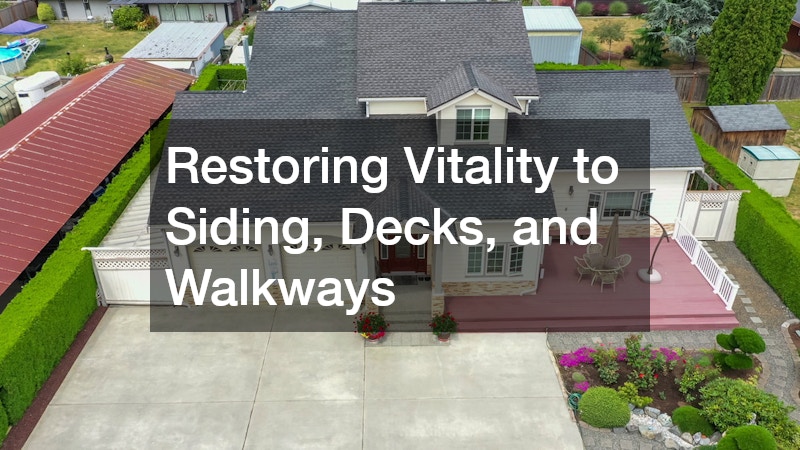
Over the course of a year, your home’s exterior surfaces collect a thick layer of atmospheric pollution, pollen, dust, and biological growth like mold, mildew, and algae. This accumulation dulls your home’s colors and can slowly degrade paint and wood finishes. Deep-cleaning these surfaces is one of the fastest, most cost-effective ways to restore a brand-new look to your property. However, blasting your home with indiscriminate high pressure can gouge wood decks, strip paint, and tear window screens.
The secret to safe restoration is matching the right cleaning method to the specific surface. For instance, concrete driveways and stone walkways can easily handle high-pressure washing to lift deep oil stains and ground-in dirt. Conversely, vinyl siding, stucco, and delicate painted trim require a low-pressure technique, often called soft washing. This method relies on specialized, biodegradable cleaning solutions to break down mold and algae at the root, which is then gently rinsed away with low pressure. Contracting professional pressure washing services ensures the right equipment and chemical balances are used, preventing expensive property damage while restoring your home’s surfaces to pristine cleanliness.
While cleaning removes surface contaminants, you must look upward to ensure the primary shield of your home is intact. Your roof line is highly visible from the street and accounts for up to 40% of your home’s exterior visual presence. A roof covered in dark algae streaks, curling shingles, or rusted flashing looks neglected and compromises the entire home’s envelope.
- Conduct Bi-Annual Inspections: Use binoculars to inspect your roof from the safety of the ground every spring and autumn. Look for missing granules, lifted shingles, or damaged boots around ventilation pipes.
- Keep Flashing Clear: Ensure the metal flashing around chimneys and roof valleys is free of debris, as these are the most common areas for water intrusion.
- Hire Certified Specialists: Roof maintenance and replacement are highly technical tasks that directly affect your homeowner’s insurance and property structural integrity. Working with qualified roofers ensures any hidden deck rot is repaired, high-wind installation techniques are utilized, and modern, architectural dimensional shingles are applied to give your roof rich texture and shadow lines.
The final piece of the structural preservation puzzle involves how your home manages the massive volume of water shedding off that roof. Without an engineered drainage system, rainwater cascades directly off the roofline, eroding your custom landscaping beds, staining your siding, and pooling against your foundation wall—which can eventually crack concrete and flood your basement.
Standard sectional gutters often catch leaves on their internal seams, leading to clogs, sagging channels, and unsightly leaks at the joints. Upgrading your home to seamless gutters eliminates these weak points. Because these systems are custom-fabricated on-site from a single continuous coil of aluminum or copper, they provide a sleek, unbroken line that mimics architectural crown molding while ensuring completely leak-free water transport. Pair these systems with wide downspouts that extend at least four to six feet away from your foundation, or tie them directly into underground French drains to keep your soil stable and your property dry.
Beautifying your home’s exterior and property is a rewarding journey that blends living nature, sturdy hardscaping, and meticulous structural maintenance. By looking at your home as an interconnected system—where boundaries frame the land, landscapes soften the architecture, and clean, well-maintained structures protect your investments—you can create a stunning presentation that brings joy every time you turn down the driveway.
Do not feel pressured to execute every upgrade at once. Focus your initial energy on projects that resolve immediate drainage, safety, or structural issues. Once your property’s foundational elements are secure and clean, transition into the creative, stylistic enhancements that allow your unique style to shine through. With a systematic approach and the right balance of professional expertise, you can craft an exterior that remains beautiful, functional, and welcoming for many years to come.